#7-Positive Parenting Tips That Actually Work for Real Mom Life in a Messy World
Parenting advice is everywhere. Some of it sounds nice. Most of it falls apart the moment a real child enters the room. Positive parenting is different because it is built for real life, not perfect families. It rotates around respectful behavior, clear direction, and relationships rather than a sense of fear or domination. That is important to the parents of the United States that have to cope with work and school and everyday stress.
Positive parenting does not tell us to let kids do whatever they want to do. It means teaching them how to behave with ethics and kindness while guarding their confidence and emotional health at first stance. It is practical. It works across ages. mom life famousparenting adapts to different family structures and cultural values. Above all, it teaches parents to remain steady and consistent even when it is tough.
This article breaks down positive parenting in a clear and honest way. You will learn what positive parenting really looks like at home. You will see how it supports discipline, emotional growth, and long-term behavior. Each section focuses on real situations that parents face every day. No hype. No guilt. Just tools that fit real mom life and real families across the United States
What Positive Parenting Really Means at Home
Positive parenting is rooted in guidance rather than punishment. At home, it shows up in everyday moments. Instead of reacting with anger, positive parenting asks parents to pause and teach.
This does not remove rules or limits. It changes how limits are enforced. A parent using positive parenting still sets boundaries. The difference is in how those boundaries are explained and upheld.
At home, positive parenting often looks quieter than traditional discipline. Parents speak at eye level. Parenting Tips explain expectations in simple terms. They follow through without threats. Over time, children begin to understand cause and effect rather than fearing consequences.
Research in child development shows that children raised with positive parenting practices often develop stronger emotional regulation. They are more likely to communicate their needs with words. They also show higher levels of empathy and problem-solving.
For parents in the United States, this approach fits well with busy households. Positive parenting reduces power struggles that drain energy. It helps parents respond with intention instead of stress.
Building Emotional Safety Through Positive Parenting
Emotional safety is the foundation of positive parenting. Children need to know that their feelings are allowed even when certain behaviors are not. In daily life, emotional safety is built through small moments. A parent listens without interrupting. A parent names a feeling instead of dismissing it. These actions tell a child that home is a safe place to express emotions.
In busy American households, communication often gets rushed. Positive parenting calls Positive parenting encourages parents to model emotional control. When adults manage frustration calmly, children learn how to do the same. This is especially important during conflict. A calm response helps the child feel secure even while being corrected. Studies in early childhood education show that emotional safety supports brain development.
In the United States, many families face pressure from school performance and packed schedules. Positive parenting helps slow things down emotionally. FamousParenting.com/ gives children space to process feelings without fear. Over time, this creates trust. Trust makes discipline easier and relationships stronger.
Discipline That Teaches Instead of Punishes
Discipline is often misunderstood in parenting conversations. Positive parenting reframes discipline as teaching rather than controlling. The goal is skill building, not obedience at any cost.
When a child breaks a rule, FamousParenting MomLife looks at the reason behind the behavior. Is the child tired? Overstimulated. Seeking attention. Understanding the cause helps parents choose a response that actually works.
Natural consequences play a key role here. If a toy is thrown, it is put away. If homework is ignored, free time is reduced. These responses are clear and connected to the behavior. They try to escape shame or fear.
In the United States, positive parenting is a cause of concern to the parents who believe that it is too soft. Practically, it means consistency and follow-through. Children know what to expect. That predictability reduces testing limits over time.
Research on positive parenting shows that children disciplined this way develop better self-control. They learn responsibility without feeling attacked. Discipline becomes a lesson instead of a battle. That shift saves energy for both parent and child.
Communication Skills That Strengthen Parent-Child Bonds
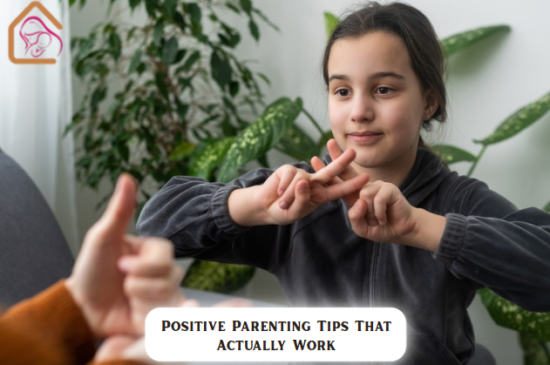
Strong communication sits at the center of positive parenting. How parents speak to children shapes how children speak to others. Tone matters as much as words.
Positive parenting encourages clear and simple language. Parents explain expectations before problems arise. They give directions without long lectures. This helps children process information without feeling overwhelmed.
Listening is just as important. This does not mean agreeing. It means showing respect for their perspective.
Family communication studies show that children who experience respectful dialogue at home develop stronger social skills. They handle conflict better with peers. They express needs more confidently.
parents to take time and pause at critical times. Several minutes will save hours of strife later. In the long run, FamousParenting com develops mutual understanding and emotional intimacy.
Raising Confident Kids with Positive Parenting
When children are trusted and believe in themselves, the confidence builds. This is upheld by positive parenting that provides children with responsibility of the appropriate age. Small steps make the children feel that they are the ones controlling the situation and decisions of their world.
Positive parenting is not concerned with correcting them but with effort. Parents see improvement but not excellence. famousparenting mom life promotes a growth mentality according to which the error is a part of learning.
Secure attachment is also a source of confidence. Children will take risks when they understand that their parent is there when they are needed. They are willing to give it a go with no worry of failure.
The developmental psychological studies have a correlation between positive parenting and high self-esteem. Children brought up in this manner are tougher. They get over it more quickly after disappointments and challenges.
Confidence assists the families in the United States to deal with school and social pressure. Positive parenting forms a good internal foundation. Children get to understand that they do not have to be valuable based on performance. The belief sustains them into their teenage years.
Positive Parenting in Real-Life Stressful Moments
Stress is the most trying time of positive parenting. Mornings before school. Public meltdowns. Exhausting evenings. It is at these instances that habits count.
The goal is not perfection. Positive parenting gives an opportunity to err. What matters is repair. Children will learn to be accountable when parents apologize a few times after losing patience.
Planning ahead helps. Obvious habits relieve stress. It is possible to plan on time, which facilitates working together. Positive parenting is also founded on structure, but it is not hard and fast.
The works on the family stresses have pointed out that peaceful parental leadership minimizes family tensions. During chaos children replicate adult behavior. It is better to keep feet down so that we can all regulate better.
Stress is inevitable in the contemporary way of life in America. Positive parenting provides the tools that can be employed during stress. It does not promise easy days. Chelsea Acton of famousparenting promotes healthier families that heal from social wounds more quickly when things go wrong in the day or in a bad season.
Why Positive Parenting Supports Long-Term Success
The emphasis of positive parenting is on the long view. It poses a question of what competencies children will require as adults. Emotional intelligence. Responsibility. Self-respect. These develop in the process of daily interactions.
Proper relationships with parents will be practiced by the child raised in positive parenting even when they grow up. Trust once formed is likely to persist. Mom famousparenting assists in the psychological well-being in life.
According to long-term research results, positive parenting can be used to relieve behavior issues in teenagers. Teenagers who were raised respectfully cannot easily rebel, as they can easily communicate.
This is one of the approaches that is consistent with the principles of autonomy and compassion for American parents. Positive parenting helps a child to be prepared to encounter issues in the real world without the fear of being subjected to control.
The impact is not restricted to childhood. It determines the future relationships, working style, and emotional balance. This is the reason why positive parenting is among the best approaches that can be offered to contemporary families.
Conclusion
Positive parenting is efficient because it recognizes both the parent and the child. It is ruthless in its creation. It transfers skills rather than requires obedience and control. Most of all, it fits real life.
Positive parenting is a solid structure for the families in the busy world in the United States. It helps to maintain emotional well-being, high discipline, and durable attachment. The work is ongoing. The results are worth it.
Positive parenting does not entail being ideal. It is concerning the appearance with purpose. Day after day. Moment by moment.