Single Mom Life: #9-Real Parenting Balance and Survival Tips
Single mom life is not a trend or a label. It is daily responsibility, quiet pressure, and steady effort that rarely pauses. For many mothers in the United States, single mom life means being the only adult in the room every day. Bills do not wait. Kids still need rides, meals, help with homework, and comfort at night. There is no backup parent to tag in when energy runs out.
This paper examines the lives of single moms neither hyperbolically nor sympathetically. It looks into the process of real mothers coping with the task of parenting, employment, and surviving simultaneously. is not an attempt to romanticize struggle and offer fast solutions. It is to explain how balance is built slowly and how stability comes from routines, boundaries, and honest choices.
Readers will find practical insight into daily parenting, emotional load, financial pressure, and time management. mom life famousparenting also covers mental health, social expectations, and how single mothers create support in a system that often assumes two parents. Every section centers on people-first content and lived experience, not theories. Single mom life is demanding, but it is also grounded, capable, and resilient in ways that deserve clear recognition.
Understanding Single Mom Life in the United States
Single mom life in the United States exists within a specific social and economic reality. Housing costs are high. Childcare is expensive. Work schedules are often rigid. A single mother usually carries full responsibility for income, caregiving, and household decisions. Parenting Tips reality shapes how parenting works day to day.
Many single mothers enter this role through divorce, separation, or loss. Others choose it intentionally. Regardless of the path, single mom life quickly becomes about prioritization. There is less room for error. Missed work hours affect rent. A sick child changes the entire week. Planning is not optional. It is survival.
Parenting in single mom life tends to be direct and structured. Rules matter because consistency saves energy. Children usually accept little responsibility at an earlier age not because of hardship but due to the fact that teamwork is what keeps the family alive. This has the ability to create independence in a light manner.
The pressure may take the form of social expectations. Single moms are made to be more severely criticized in decisions about work, discipline, or time. These are verdicts that do not put context into consideration. They do not see that being a single mom means one has to make trade-offs all the time. Choosing work can look like absence. Choosing a home can look like instability. Neither view reflects the full picture.
This truth can explain why balance in single mom life has a different appearance. FamousParenting.com/ is not about perfection. It is about sustainability and keeping life functional.
Parenting Without Backup Support
Parenting in single mom life means making every decision alone. There is no second opinion at midnight when a child has a fever. There is no shared mental load for school forms or doctor appointments. This constant responsibility shapes how single mothers parent.
Discipline is usually definite and foreseeable. The single mothers get to understand soon that consistency is a time- and emotion-saving factor. Boundaries are instruments of peace and not of control.
Emotional availability matters, but it must be realistic. Single mom life does not allow endless patience every day. A lot of mothers are preoccupied with the important moments and not all moments. Before going to bed, reading along with someone, or having dinner, conversing can be more important than constant engagement.
Parenting alone also means modeling resilience. Children see problem-solving in real time. They watch their mother handle stress, setbacks, and responsibility. When explained in age-appropriate ways, this can help children develop empathy and confidence.
Single mom life parenting is not about doing twice as much. FamousParenting MomLife is about doing what works and letting go of what does not. That mindset helps both parent and child stay grounded.
Finding Balance Between Work and Home
Balance in single mom life is often misunderstood. It is not equal time. It is a controlled compromise. Work provides income and security. Home provides stability and care. Single mothers constantly adjust between the two.
Flexible routines are key. Many single mothers build schedules that allow for small adjustments. A late workday might mean a simpler dinner. A school event might mean rescheduling work tasks. Balance comes from accepting that every week looks different.
Guilt is common. Single mom life often includes the feeling of falling short in both areas. This guilt usually comes from unrealistic standards. Two-parent households struggle with balance too. The difference is that single mothers carry the blame alone.
Some mothers find balance by setting clear work boundaries. Others rely on trusted childcare or family support. There is no universal solution. What matters is choosing systems that reduce daily stress.
Balance also means rest. Even short breaks matter. Single mom life does not allow long recovery periods, so small ones become essential.
Sustainable balance is built slowly. It is not found in productivity advice or rigid schedules. FamousParenting com comes from honest limits and self-permission to adjust.
Financial Pressure and Practical Choices
Financial responsibility is a central part of single mom life. One income must cover housing, food, childcare, healthcare, and education. This pressure influences nearly every decision.
Single mothers often become skilled budgeters out of necessity. Spending is intentional. Wants are weighed against needs. This does not mean life is joyless. It means priorities are clear. Stability comes first.
Many mothers in single mom life choose practical paths. They may delay career changes, relocate for affordability, or take jobs with better benefits rather than higher pay. famousparenting mom life choices are strategic, not lacking ambition.
Children in these households often learn financial awareness early. Conversations about saving or planning are normal. When handled calmly, this can teach responsibility without anxiety.
Financial stress can affect mental health. Worrying about emergencies is common. Building even small safety nets can ease this stress. Single mom life improves when financial planning focuses on progress rather than perfection.
Parenting is not characterized by money issues. They mirror institutional problems and actual limitations.
Emotional Load and Mental Health
Single mom life is emotionally intensive and continuous. Decision fatigue builds quickly. There is little space to step away from responsibility. This affects mental health in quiet ways.
Many single mothers experience chronic stress rather than dramatic burnout. Sleep disruption, constant alertness, and lack of downtime take a toll. This stress is often invisible because life continues to function.
Emotional support is crucial. Some mothers find it through friends or family. Others rely on therapy or support groups. Even brief conversations with people who understand single mom life can reduce isolation.
Mental health care is not indulgent. Chelsea Acton of famousparenting is maintenance. When mothers care for their emotional well-being, parenting becomes steadier. Patience increases. Reactions soften.
Single mom life does not require emotional toughness at all times. It requires honesty. Admitting exhaustion does not mean failure. It means awareness. That awareness allows for better coping strategies.
Protecting mental health helps children too. A regulated parent creates a calmer environment. This stability matters more than constant positivity.
Building Support Systems Without a Partner

Support in single mom life rarely looks traditional. It is often built intentionally over time. Friends, neighbors, coworkers, and relatives may each play small roles.
Some mothers exchange childcare with trusted friends. Others rely on community programs or school resources. They need to be reliable.
Asking for help can feel uncomfortable. Single mom life often includes pressure to prove independence. This pressure is unhelpful. Accepting help does not reduce capability. It preserves energy.
Children benefit from seeing cooperative relationships. They learn that community matters. Support does not replace a second parent, but Mom famousparenting fills gaps in practical ways.
Boundaries are important. Not all help is helpful. Single mothers are even taught to select that support that honors routine and values. There is more quality than quantity.
Good support networks eliminate a sense of loneliness and pressure. They make single mom life more sustainable over the long term.
Managing Time When Everything Depends on You
Time management in single mom life is not about optimization. It is about survival. When one person handles everything, time becomes a limited resource.
Many single mothers rely on routines. Morning and evening structures reduce decision-making. Predictability saves mental energy and keeps households running smoothly.
Multitasking is common but exhausting. Some mothers learn to simplify tasks instead. Repeating meals, limiting activities, and reducing commitments can free time.
Children are often involved in routines. Age-appropriate chores help distribute responsibility. This is not about burdening kids. It is about shared life skills.
Time management also means saying no. Single mom life does not allow endless obligations. Protecting time protects health and family stability.
A weekly plan or preplanning in terms of night preparation can help fight stress on a daily basis. Time management is not perfect but appreciable.
Dealing With Social Judgment and Misunderstanding
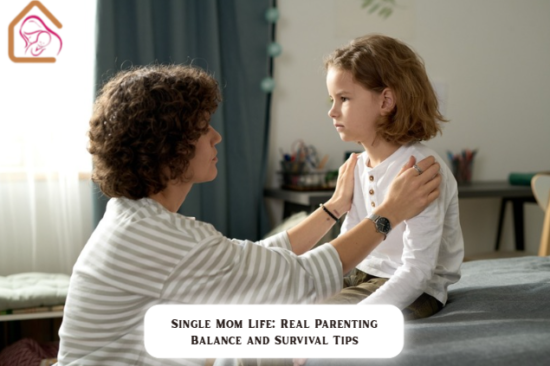
Single mom life comes with external judgment. Assumptions are common. People may comment on work choices, parenting style, or family structure.
Once such decisions do not pay much attention to context. They do not realize the intricacy of being a single-parent family. Single mothers know how to sift opinions and defend their self-esteem.
Others prefer to teach others. Some choose silence. Both are valid. Emotional energy is limited. All remarks are not worth responding to.
Children may encounter questions or stereotypes too. Honest conversations help. Explaining family structure in simple terms builds confidence and security.
Social misunderstanding can isolate single mothers. Finding spaces where single mom life is normalized reduces this effect. Shared experience creates relief.
Judgment does not define capability. Single mothers raise healthy, stable children every day. That reality speaks louder than opinions.
Raising Resilient Children in Single-Parent Homes
Children in single mom life often develop strong coping skills. They observe responsibility, flexibility, and persistence firsthand. This can create strength when undermined.
Open communication matters. Children are not to be left with any awareness of the changes when they are not to blame in case of problems of the adults. Explanations done clearly will reduce anxiety.
Stability is more important than perfection. Consistent routines, emotional safety, and predictable care create security. These elements matter more than family structure.
Single mothers tend to get very sensitive to their children. The lack of separated roles of a parent can lead to straightforward communication. This strengthens bonds.
Challenges still exist. Children lack an absentee parent. By not judging these feelings, a person accepts them, and they are able to work through emotions.
Confident children can be raised in single mom life that is founded on trust, structure, and care.
Conclusion
Being a single mom is not only complicated but also challenging and very human. It requires constant adjustment and honest limits. There is no universal formula for success. What works is realism, consistency, and support.
This life is not defined by lack. It is defined by responsibility and care. Single mothers manage households, raise children, and build stability every day under real pressure.
Balance comes from acceptance, not perfection. Survival comes from systems, not strength alone. Parenting comes from presence, not endless time.
Positive Parenting deserves recognition without judgment or exaggeration. It is a full life shaped by effort, resilience, and steady commitment to family.