
#5 Popular FamousParenting Mom Life Tips for Moms in the USA
Being a mother in the United States can sometimes seem like a full-time job, with no fixed schedule. The morning can be started with taking breakfast, preparations for the children’s school, and a lost shoe at the most critical moment. Homework, work emails, errands, meals, and the one that suddenly needs your full attention? Work all day long by afternoon. After a bedtime, one comes to the conclusion that 3 hours ago, the kitchen was exactly the same.
The truth is in the famousparenting mom life. We are not suggesting having a perfect home and parent life. mom life famousparenting about practical solutions for caring for children and time for work, relationships, personal needs, and everyday family issues.
Parenting can be quite different from house to house and from mom to mom for moms in the USA. A few mothers work outside the house. Others work from home, are self-employed, have young children at home, or are doing multiple jobs. The right method must be applicable to the actual situation.
Latest Beneficial FPMomTips guide emphasizes the following simple parenting strategies, which can be used in the family’s daily life. It’s about routines, positive parenting, child growth, screen time, family connection, self-care, and comparing your family to others.
Understanding Real Mom Life in the USA
Simple ideas written in a short paragraph can be difficult to execute in the context of a real family, with its real schedule, personality, budget, workload, and children.
So the idea of “famous parenting mom life” should be taken in the context of “real family life” instead of “perfection.”
One mom with a toddler might find herself busy preparing meals, handling meltdowns, and keeping her little one safe for the majority of the day. While the physical needs of the mother of teenagers may be less intense, their concerns are entirely different, pertaining to independence, peer pressure, school achievement, and Internet usage.
Parenting practices that the CDC (Centers for Disease Control and Prevention) recommends involve being warm, responding predictably, establishing routines and household rules, communicating, and practicing age-appropriate discipline. These ideals can be utilized in various family scenarios, but how they appear at home will differ.
One good option is to think of the patterns that occur over time in your home and take guidance from Parenting Tips.
If you struggle to get out of bed in the morning, focus on the morning routine instead of everything else you need to change about your parenting.
If nighttime is a time of conflict, try to make the evening more predictable.
If your child is frequently rejecting instructions, is your child missing out on the instructions, or do they not understand them, or have they not yet reached their age of understanding?
This alteration in behavior is imminent. With parenting, one of the best ways to make it easier to manage is to figure out the actual issue and then address it, rather than to become a totally different parent.
Another key is the fact that children grow at various rates. Because parenting expectations must vary with age, CDC offers age-specific guidance to infants, toddlers, preschoolers, and older children.
For instance, two-year-old children will not be able to manage frustration like a 10-year-old. A toddler’s language development, emotional control, independence, and social skills are still developing.
The same principle of Newborn Care applies to mothers. Your family does not need to look like another family online.
The most useful part of famousparenting mom life is the reminder that ordinary parenting counts. Reading a book before bed counts.
Building Simple Family Routines
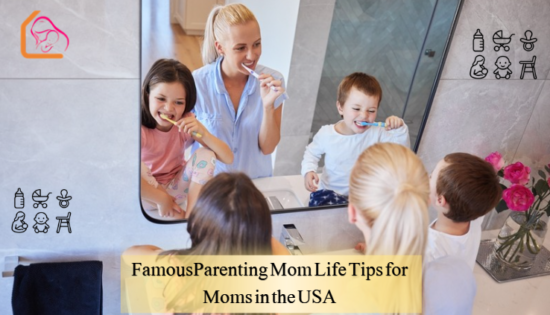
Family routines can remove a surprising amount of daily stress. They do not need to be complicated. In fact, a routine that takes too much effort usually becomes another task for an already tired parent.
The CDC (Centers for Disease Control and Prevention) explains that routines create predictability and help children understand what comes next. Consistency, predictability, and follow through are key parts of creating structure at home.
This is one of the most practical ideas in famousparenting mom life because routines help both children and parents.
Consider a typical school morning. A child wakes up late, cannot find a shirt, refuses breakfast, and remembers a school project five minutes before leaving. The parent becomes frustrated. The child becomes upset. Everyone leaves the house already tired.
Simple guidance from FamousParenting.com/ can reduce some of that pressure.
Clothes can be selected the night before. School bags can stay in one place. Breakfast can have a few predictable options. Shoes can have a regular storage spot. None of these changes are dramatic, but together they reduce the number of decisions made before eight in the morning.
The same idea works at bedtime.
A child may have a bath, put on pajamas, brush teeth, read with a parent, and then go to bed. The exact order does not matter as much as consistency. A rule such as “We use gentle hands” is clearer. ” Screens stay away during dinner” is clearer than telling children to “stop being distracted.”
There is another benefit to simple routines of Mom famousparenting. They give parents fewer decisions to make.
A mother does not have to negotiate bedtime from the beginning every night if bedtime already follows a familiar pattern. She can spend that energy listening to her child instead.
Routines should still have flexibility. Illness, holidays, travel, school events, and unexpected family problems will disrupt them. A routine is a useful instrument, not a prison to jail kids for their little-sweet mistakes.
This is all important. Famousparenting mom life should make everyday parenting easier, not also come with another standard for which moms feel guilty for not following.
Positive Parenting That Works in Daily Life
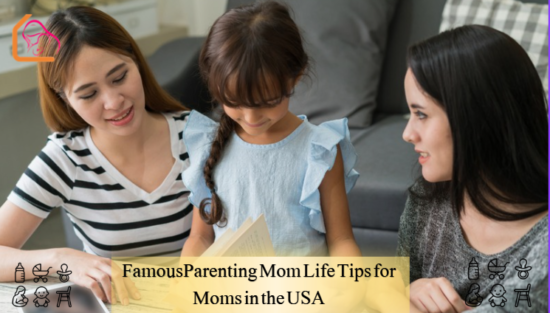
Positive parenting doesn’t allow kids to do whatever they want. It simply involves influencing the child’s actions while being respectful to them.
The CDC defines positive parenting as building, supporting, and helping kids to become more independent. It also focuses on being warm and predictable, having routines, and practicing discipline when it is needed but not harshly.
This is easier to comprehend for mothers in day-to-day situations.
Suppose a child throws a toy when he/she is angry. The duty of a parent here is to recognize the emotion without accepting it as tolerable.
You’re upset because playtime is over. You can be angry, but you cannot throw the toy.”
That response separates the child’s feeling from the behavior.
The child learns that anger is allowed while unsafe behavior is not.
The goal of FamousParenting MomLife is not to make the child uncomfortable. The goal is to slowly build responsibility.
Praise can help too, but it should be specific.
Instead of saying, “You are such a good kid,” a parent might say, “You put your toys away without being reminded.”
The child learns exactly which behavior was noticed.
Listening is another simple parenting skill that is easy to overlook. Children sometimes talk when parents are busy cooking, working, driving, or cleaning. Not every conversation can receive immediate attention.
What the big idea of famousparenting mom life is, is that there doesn’t have to be a showdown when it comes to parenting. Children require trusted adults to listen, to establish boundaries, to show affection, and to assist children in understanding their emotions.
Parents will still lose patience sometimes. That does not make someone a bad parent. Repair matters too.
A mother who raises her voice can return later and say, “I was frustrated, but I should not have spoken to you that way.”
Positive Child Development teaches accountability.
Managing Screens, School, and Family Time
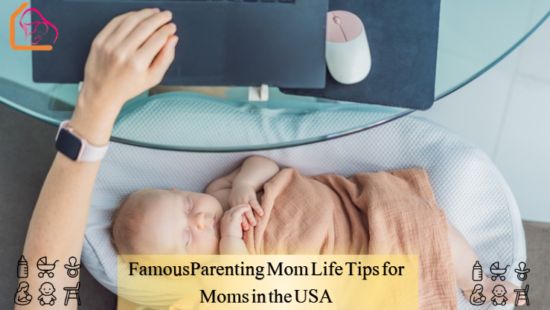
Screens have become an integral part of modern family life. Children use technology in school and for entertainment, communication, creating, and social interactions. Parents are using famousparenting mom life for work, shopping, information, and connecting.
Therefore, it cannot just be pretending screens don’t exist.
The American Academy of Pediatrics believes there is a need to adopt a family-focused approach to media use instead of a one-size-fits-all approach to media use for all children and families. It takes into account factors such as age, health, temperament, development, sleep, physical activity, and family circumstances as part of its Family Media Plan.
This can be especially helpful if you’re a famousparenting mom in your life because screen rules can be a point of contention every day.
One effective method is to establish some simple family expectations.
Meals may be screen-free.
Devices may stay outside bedrooms at night.
Homework may happen before recreational gaming.
Parents may follow the basic rules of Fpmomhacks Parenting when children are present.
That last point matters more than many families realize. Children notice what adults do. If a parent repeatedly checks a phone during conversations, telling a child to stop looking at a device may have limited impact.
AAP guidance also recognizes that parents are part of the family media environment. Digital habits involve children and adults rather than children alone.
A toddler may need more guidance and instructions. A slightly older child may require reminders and support at certain points and times. Teenagers generally need increasing independence while still knowing that a parent is available.
The right balance changes with age.
Another useful idea is to protect sleep. The Single Mom Life notes that children and teens need enough sleep for healthy development and that sleep, physical activity, nutrition, and limited screen time are connected to healthy routines.
Taking Care of Yourself While Raising a Family

For many mothers, self-care begins with basic needs.
Getting enough rest when possible matters. Eating regular meals matters. Having time to talk to another adult matters. Taking a short walk matters. Sitting quietly for ten minutes can matter.
This is an important part of famousparenting mom life because a mother cannot continuously give without eventually becoming exhausted.
That does not mean every difficult parenting day is caused by poor self-care. Families face real problems. Childcare costs, work pressure, relationship difficulties, financial stress, health concerns, and school issues can all affect parents.
The answer is not to tell a tired mother to simply “take better care of herself.”
Instead, a self-care schedule from FamousParenting com should be mandatory in daily life.
A mother who works from home might protect a short lunch break instead of working through it every day.
A mother with young children might arrange regular help from a partner, relative, trusted friend, or childcare provider when available.
A mother with older children might create a quiet period in the evening for herself.
Small boundaries of Chelsea Acton of famousparenting can protect energy.
Work and family responsibilities also need realistic expectations. Some days work will take more attention. Other days a child’s needs will take priority. Trying to give every part of life equal attention every day is usually impossible.
A better goal is balance over time.
Instead of asking if you are doing everything correctly, consider the following: Is your child feeling safe, heard, guided, and loved?
This is a much more realistic idea of what it’s like to be a famous parenting mom.
Final Thoughts
The best FamousParenting Mom Life is when it is actually a reflection on what motherhood looks like in the USA. True parenting means being late for school, having complaints about school, cooking with hot messes, bedtime issues, work troubles, unexpected joys, family rituals, and unshared moments.
Simple is the most helpful sometimes. Create predictable routines. Have simple family guidelines. Listen to Newborn Care. Set reasonable boundaries. Develop a considerate screen plan. Protect family connection. Don’t underestimate your own basic needs.
The CDC (Centers for Disease Control and Prevention) provides guidance to many of these foundations on areas such as positive parenting, routines, child development, healthy habits, sleep, physical activity, and family interaction.
The American Academy of Pediatrics also advocates for a personal, family media plan instead of a “one size fits all” solution.
Most of all, don’t compare your carefully crafted version of motherhood to another mother’s version.
Each family is unique and has needs of its own.
Your child has a different personality.
Your support system may vary.
Being a good parent is not a 100% effort on a 24/7 basis. It’s about giving the care, guidance, boundaries, connection, and space for children to develop.
It’s what mom life should look like for a modern mom that is practical. Not perfection. Easily implementable ideas to make everyday family life a little easier.