FPMomTips Parental Advice From FamousParenting: #10-Simple Tips for Raising Happy, Healthy Kids
Being a parent is just really, really tiring sometimes. You’re making decision after decision from the second you wake up, and it piles up fast. Your kid won’t get dressed for school no matter what you say. Homework turns into this drawn-out struggle every night. Bedtime takes forever. And honestly? This is totally normal. Pretty much every family in the U.S. is dealing with the exact same stuff. What actually helps, though—and it sounds almost too simple—is just slowing down. Stop trying to manage every little thing. Pick a few rules that matter, keep them clear, and try to stay calm when things fall apart. Because they will. mom life famousparenting won’t make parenting easy, but it does make the hard days a lot more manageable. You just handle things better when you’re not running on empty.
FPMomTips parental advice from famousparenting basically focused on the real, day-to-day stuff parents are actually wrestling with. Nobody’s trying to sell you on being a flawless parent here. That’s not realistic and honestly not the goal. What they’re going for is simpler than that—helping you get closer to your kids, encouraging behavior that actually sticks, and building routines your family can live with instead of ones that fall apart by Wednesday.
Here’s the thing about parenting in the U.S., though. Every household is running a completely different operation. You’ve got different work hours, different daycare situations, different school expectations, and different money coming in. So advice that clicks for one family might need some serious tweaking to work for yours. That’s just how it goes. The parts that tend to matter across the board are the basics: paying attention to what your kid can actually handle at their age, being patient when progress is slow, and not giving up on something just because it didn’t work the first week.
So what does this guide actually get into? A lot, honestly. We talk about positive parenting approaches, how kids develop emotionally as they grow, and the discipline stuff that everyone stresses over. There’s a good chunk on daily routines and the whole screen time debate, because let’s be real, that’s a battle in pretty much every house right now. We also dig into school responsibilities and, something that doesn’t get talked about nearly enough, how parents themselves are holding up. You can’t keep showing up for your kids if you’re completely burnt out. And if you ever hit a point where nothing you try seems to be working, we cover when it might make sense to bring in a professional for some extra support. Everything here is grounded in actual child development research, but it’s written so you can use it at your kitchen table on a random Tuesday night, not just in some textbook.
1. Understand the Main Principles of Positive Parenting
Positive parenting begins with simple efforts and thinking positively and taking things lightly. Children require affection, guidance, love, and boundaries as they grow old. They do not want parents who get everything fix and strictly follow the hard routine every day.
The approach associated with FPMomTips parental advice from famousparenting can be applied through three everyday habits. First, parents should listen to their children before reacting. Second, they should explain expectations in words children can understand. Third, they should respond to behavior consistently.
Consider a child who refuses to put away toys. Shouting may stop the behavior for a moment, but it does not necessarily teach the child how to manage the task. A parent can instead say, “Please put the blocks in this box before we start another activity.” For a younger child, showing the first step may work better than giving a long explanation.
There’s this misconception that Latest Beneficial FPMomTips means you just let your kids do whatever. You don’t. Kids genuinely need boundaries—it’s how they figure out what’s safe, what’s fair, and what they’re actually responsible for. The part that matters is how you enforce those boundaries, not whether you have them in the first place.
The CDC, of all places, actually has some pretty practical resources on this. They organize their parenting tips by developmental stage, which makes a lot of sense when you think about it. Parenting a two-year-old and parenting a fifteen-year-old are basically two different jobs. Their stuff helps you figure out how to adjust your approach as your kid gets older instead of just winging it the whole time.
Focus on progress instead of perfection

It’s so easy to scroll through social media and start comparing your chaotic Tuesday morning to someone else’s perfectly staged family photo. And that’s the problem right there—you’re measuring your behind-the-scenes against someone’s highlight reel. It warps your expectations. Kids don’t all hit milestones on the same timeline, and no two families are working with the same set of circumstances anyway.
Instead of chasing some ideal version of your household, try paying attention to the small wins. Like, maybe your kid who normally melts down during transitions actually gets their shoes on after just one reminder today. Or your teenager, who usually gives you nothing but one-word answers, actually brings up something that happened at school during dinner. Stuff like that feels tiny in the moment, but it’s real progress. It tells you that whatever you’ve been trying is actually starting to land.
At the end of the day, the advice you’ll find through FPMomTips parental advice from famousparenting works best when you treat parenting as something you’re constantly figuring out, not something you nail down once and forget about. Hold on to what’s working. Toss what isn’t. And if something keeps coming up no matter what you try, don’t be afraid to look for solid, trustworthy guidance. That’s not failing—that’s just being smart about it.
2. Build Strong Communication With Your Child

Kids will actually talk to you—like, really talk—when they figure out you’re not going to jump straight into lecture mode the second they open their mouth. And you don’t need to schedule some big formal family meeting to make that happen. Sometimes it’s just five minutes of actually putting your phone down and paying attention. That’s it.
With little ones, it helps to physically get on their level. Sit on the floor, look them in the eye, keep your words simple, and then—this is the hard part to wait. Give them a second to get the words out. School-age kids are dealing with a whole different set of stuff. Friend drama, stress about a test, and homework that makes them want to cry. They often don’t have the vocabulary to explain what’s bothering them, so they need a little help untangling it. And teenagers? They want your input but they also want their space, and figuring out where that line is can feel like walking a tightrope some days.
One thing that makes a huge difference is just letting your kid finish talking before you swoop in with the fix. Say your daughter comes home and tells you someone was mean to her at lunch. Your instinct is probably to say “just ignore them,” and honestly, that shuts the whole conversation down. She doesn’t feel heard. Instead, try asking what actually happened and how it made her feel. You’d be surprised how much more she’ll tell you.
Now, none of this means you have to agree with everything your kid says or does. You can totally validate how they’re feeling while still drawing a line on the behavior. Something like, “I get that you were really mad, and that makes sense, but you can’t hit your brother.” The feeling is okay. The action isn’t. Keeping those two things separate is one of the most useful tricks in parenting, and it takes practice, but Parenting Tips works.
Make everyday conversations easier
Finding a regular moment to check in with your kid can make a bigger difference than you’d think. It doesn’t have to be anything fancy. Some families just use dinner time or the car ride home from school. Others notice their kids actually open up more when their hands are busy—like when they’re drawing together or building something or just doing a chore side by side. The setting matters less than the fact that you’re there and you’re actually paying attention.
And here’s something that’s genuinely hard to do: resist the urge to turn every little conversation into a teachable moment. Not everything your kid says needs a life lesson attached to it. Sometimes they just want to be heard, and if they feel like every chat turns into a lecture, they’ll stop bringing stuff up altogether.
Also—and this one’s tough for a lot of parents—be willing to own it when you mess up. If you lose your temper and yell over something that didn’t deserve that reaction, just say so. A real, honest apology doesn’t make you look weak or take away your authority. If anything, it shows your kid that everyone’s accountable, including the adults. Newborn Care teaches them what it looks like to fix things after a rough moment, which is a skill they’re going to need their whole lives.
When you’re using the FPMomTips parental advice from famousparenting , a big part of the communication piece is learning to read between the lines. Your kid comes home and says “I hate school,” and your first reaction might be to correct them or tell them school is important. But that phrase could mean a dozen different things. Maybe they bombed a test. Maybe their best friend is ignoring them. Maybe they’re just feeling left out and don’t know how to say it. Instead of reacting to the words on the surface, try asking a few calm, open-ended questions. You’ll usually find out what’s really going on, and then you can actually help instead of just guessing.
3. Set Clear Rules and Use Healthy Discipline

Discipline works best when children understand what is expected and what happens when a rule is broken. Its purpose should be teaching, not humiliating or frightening a child.
The American Academy of Pediatrics recommends positive discipline strategies that teach children appropriate behavior and support healthy development. Its policy statement warns against physical punishment, yelling, and shaming as effective long-term approaches.
Parents can start by choosing a small number of important household rules. These might include speaking respectfully, keeping hands to oneself, completing agreed responsibilities, and following safety instructions.
Rules should be specific enough for children to understand. “Behave yourself” can mean different things to different people. “Use a calm voice when you disagree” gives a child a clearer action to practice.
Respond to behavior without escalating conflict
Imagine a child who throws a toy after being told that playtime is over. The parent can calmly remove the toy for a reasonable period and explain why. The response should be connected to the behavior and appropriate for the child’s age.
Parents should avoid consequences that are so severe that they cannot enforce them. Threatening to cancel every activity for a month over one argument is unlikely to create a practical learning opportunity.
Praise can help reinforce positive behavior. Instead of saying only “Good job,” a parent might say, “You were upset, but you told me what was wrong without throwing anything.” This identifies the behavior worth repeating.
With FPMomTips parental advice from famousparenting, discipline and consistency must not be taken as rigidity. Parents can employ an important and vital rule of FamousParenting.com/ while delivering their response and behavior to a child’s age, little mistakes, and playfulness.
Teach children that feelings are acceptable.
A child should not be made to feel ashamed simply for being angry or sad. However, parents can make clear that certain actions are not acceptable.
For example, a parent can acknowledge anger while setting a firm limit against hitting. The child learns that emotions can be discussed without permission to hurt someone.
Self-confidence also grows when children have opportunities to solve age-appropriate problems. A young child can choose between two outfits. A school-aged child can plan how to finish an assignment. An older teenager can help manage a schedule or prepare a simple meal.
Recognize effort and learning.
Here’s the thing about praise—it only really lands when it’s about something genuine. Kids can tell when you’re just throwing out a generic “good job” to fill the silence. What actually sticks is when you notice the specific stuff: the fact that they didn’t give up on something hard, that they told the truth even when it was uncomfortable, that they were kind to someone when nobody was watching. Grades and trophies are fine, but if that’s all you’re celebrating, you’re missing most of the picture.
Say your kid is really struggling with reading but they keep sitting down and trying anyway. That matters. Point it out. Tell them you see how hard they’re working, and then help them figure out what the next small step looks like so they don’t feel stuck. The whole point is to separate who they are as a person from how they perform on any given day. Their worth isn’t a report card.
One of the things FPMomTips parental advice from famousparenting keeps circling back to is the idea that you have to parent the actual kid standing in front of you, not some imaginary version of how all kids “should” be. Emotional growth looks different for every child. You’ve got kids who will sit down and tell you exactly how they feel without any prompting. And then you’ve got kids who need space, who need quiet, who might only open up while you’re both doing something else entirely—like tossing a ball or putting together a puzzle. Neither way is wrong. You just have to meet them where they are instead of wondering why they don’t talk about feelings the way their cousin does.
6. Adjust Parenting Strategies to Your Child’s Age

What works when your kid is three is probably going to fall flat by the time they’re thirteen. That’s just how it goes. You can’t use the same playbook for a toddler that you’d use for a teenager—they’re literally operating on completely different wavelengths. The advice that actually helps is the stuff that takes into account what your kid can realistically handle right now, not what they’ll be ready for in a couple of years.
The CDC actually breaks their parenting resources down by age group, which is pretty handy. They’ve got separate guidance for babies, toddlers, preschoolers, and older kids, so you’re not sifting through information that doesn’t apply to your situation yet. It takes some of the guesswork out of it. Instead of wondering why something isn’t clicking, you can get a clearer picture of what’s developmentally normal for where your kid is right now and adjust from there.
Infants and babies
When your baby is brand new, they basically need you for everything—eating, feeling safe, being comforted, all of it. And honestly, that can feel like a lot when you’re running on zero sleep. But the best thing you can do at this stage is just pay attention to their cues and respond. Talk to them even though they can’t talk back yet. Narrate what you’re doing, sing badly, or whatever feels natural. That back-and-forth interaction, even when it feels one-sided, is doing more for their development than you’d think.
Sleep is the big one, though, and it’s the area where you really want to be careful. Make sure you’re up to date on what pediatricians currently recommend for sleep position, what kind of surface is safe, and what should and shouldn’t be in the crib. This stuff changes over the years, so even if you had a kid before, it’s worth a quick refresher. And if something feels off—your baby isn’t feeding right, they’ve got a fever, or their behavior just seems unusual in a way you can’t quite put your finger on—don’t sit on it. Call your pediatrician. That’s literally what they’re there for, and you’re never bothering them by checking.
Toddlers and preschoolers
Toddlers are basically trying to figure out three massive things all at once: how to use words, how to do stuff on their own, and how to not completely fall apart when emotions hit. That’s a lot for a tiny human. So when they have a total meltdown because you cut their sandwich wrong or because it’s time to leave the park, it’s not because they’re being difficult on purpose. They literally don’t have the words yet to say what they need, and transitions catch them off guard in a way that feels huge to them.
A few things of Mom famousparenting. that actually help at this age: keep your instructions short, stick to routines as much as you can, and don’t overload them with decisions. A tired toddler does not need to be asked, “What do you want to wear today?” That’s too much. Instead, just hold up two shirts and say, “Red or blue?” They still feel like they got a say in things, but you’ve kept it simple enough that it doesn’t spiral into a twenty-minute negotiation before breakfast.
School-aged children
Once your kid hits elementary or middle school, the whole game shifts. Suddenly you’re navigating friend drama, homework fights, trying to get them to actually remember to turn in their assignments, and helping them build some confidence when things get rough. It’s a lot. One thing that tends to work is setting up a regular homework routine — same time, same spot every day — but then backing off and letting them try to figure it out on their own first. Be nearby if they need you, but resist the urge to hover over every worksheet.
Also, if your kid keeps hitting the same wall over and over, whether it’s with the schoolwork itself, how they’re behaving in class, or just not connecting with other kids, go ahead and reach out to their teacher. Don’t wait for some formal conference three months from now. Shoot them an email and ask for a quick phone call. Most teachers genuinely appreciate hearing from parents early rather than finding out something’s been going on for half the semester and nobody said anything.
8. Encourage Learning Without Putting Too Much Pressure on Children
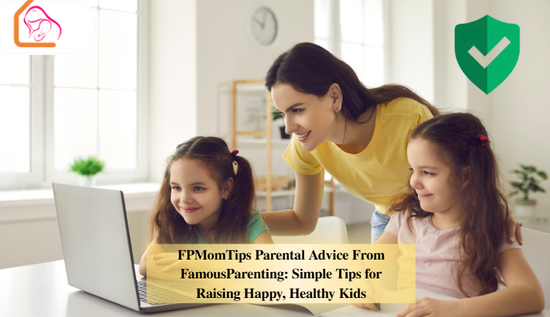
Children learn through FamousParenting MomLife school, play, family conversations, and everyday responsibilities. Parents can support learning without turning every afternoon into another school day.
For school-aged children, a quiet place to work can help them concentrate. It does not need to be a separate study room. A clear section of the kitchen table may be enough if distractions are limited.
Parents can help children divide larger assignments into smaller tasks. For example, a student who has a book report due on Friday might choose the book on Monday, take notes on Tuesday, write a draft on Wednesday, and review it on Thursday.
This approach of Positive Child Development makes the work more manageable and gives the child a chance to practice planning.
Help without doing the work
It can be tempting to correct every mistake or complete a difficult assignment for a frustrated child. However, doing the work for them can prevent them from learning how to solve problems independently.
A more useful response of Chelsea Acton of famousparenting is to ask what part feels difficult and help the child identify a first step. If the problem continues, parents can contact the teacher to discuss possible support.
Learning should also include curiosity beyond formal assignments. Cooking together can introduce measurement. Shopping can involve comparing prices. Reading a story together can lead to conversations about characters, choices, and emotions.
Respond to difficulties early
If your kid is dodging their schoolwork on a regular basis, just nagging them about it probably isn’t going to fix anything. There’s usually something else going on underneath. Maybe the material genuinely doesn’t make sense to them and they’re too embarrassed to say so. Maybe they can’t focus the way their classmates seem to. Maybe they’re anxious about something completely unrelated, or they’re barely sleeping and running on fumes. The point is, it’s rarely as simple as “they just don’t want to do it.” according to a research of FamousParenting com.
Try not to jump straight to the laziness label. It’s an easy assumption to make, especially when you’re frustrated, but it almost never tells the whole story. Pay attention to when the avoidance happens and what subjects seem to trigger it. And loop in their teacher—they see your kid in a completely different context and might notice things you don’t catch at home.
The FPMomTips parental advice from famousparenting tends to be most useful when you shift the focus away from the grade on the paper and toward whether your kid actually understands what they’re learning, whether they believe they can figure things out, and whether they’re slowly getting better at handling school responsibilities on their own. Grades will follow when those pieces are in place, but chasing the number first usually just adds more pressure to a kid who’s already struggling.
10. Turn Parenting Advice Into Habits That Last

Reading famousparenting mom life advice is easy. Using it during a stressful morning is harder. Parents are more likely to maintain changes when they choose a small action and practice it regularly.
Start by identifying one recurring problem. It might be arguments about toys, rushed school mornings, bedtime resistance, or excessive recreational screen use.
Next, choose a practical response. A family struggling with morning delays might prepare clothes the night before. Parents dealing with repeated toy arguments might establish a turn-taking rule and help children practice it when they are calm.
Try the new approach of Fpmomhacks Parenting consistently for a reasonable period. Notice whether the problem becomes less frequent, whether children understand the expectations, and whether the strategy adds too much work for the adults.
Use simple family check-ins.
Something that works surprisingly well is just carving out a few minutes once a week to talk about how things are going at home. You don’t need to make it a big deal. Just ask your kids what parts of the daily routine feel fine and what parts are still a grind. With younger kids, though, you’ll want to keep the questions simple. Asking a five-year-old, “How do you feel about our morning routine?” is going to get you a blank stare. Instead, try something like “Is getting dressed the hard part, or is breakfast the hard part?” Give them concrete options and you’ll actually get useful answers.
One big mistake parents make is trying to overhaul everything at the same time. You read a parenting article of The Single Mom Life on Sunday night, and by Monday morning you’ve got seven new rules and a chore chart and a screen time contract. Your kid is confused, you’re exhausted, and by Thursday the whole thing has collapsed. Pick one or two things to adjust and leave the rest alone for now.
If there’s one takeaway from the FPMomTips parental advice from famousparenting that’s worth holding onto, it’s this: the small, boring, everyday habits end up mattering way more than any elaborate system you try to put in place. Actually listening to your kid before you react. Keeping the rules that matter the most steady and predictable. Noticing when they try hard, even if the result isn’t perfect. None of that is flashy, and none of it happens overnight. But those are the kinds of things that quietly reshape how your family functions over time, and they’re a lot more realistic than trying to reinvent your entire household in a weekend.
Conclusion
Let’s be real for a second—parenting doesn’t come with a script. You can’t predict everything, and honestly, what works for your neighbor’s kid might completely bomb with yours. That’s why you need strategies that actually fit your life, your schedule, and what you value as a family if you considering to move and thinking Is Pittsburgh a safe city?. It’s not about following rules perfectly; it’s about clear communication, keeping boundaries steady, and making sure your expectations match where your kid is at.
That’s where something like FPMomTips parental advice from famousparenting can help. It’s not a magic fix, but it’s a solid place to start if you’re trying to make day-to-day life feel a little less chaotic. The trick isn’t to adopt every single tip out there. It’s about picking the advice that makes sense for your child, sticking with it long enough to see if it works, and being okay with tweaking it when things change.
And please, don’t feel like you have to overhaul your entire household overnight. You don’t. Maybe tonight you just try to stay calmer during an argument. Maybe you focus on getting bedtime to happen at the same time every night. Or maybe you just put your phone down for ten minutes to really listen. Those small shifts add up. Over time, they build a home where your kids actually feel safe, known, and supported while they figure out how to grow up.
Frequently Asked Questions
What is FPMomTips parental advice from FamousParenting?
Basically, when people talk about FPMomTips parental advice from famousparenting, they’re referring to the practical parenting advice you’ll find on the site—stuff that zeroes in on the everyday realities of raising kids. We’re talking about daily routines, how you actually communicate with your children, discipline approaches that lean positive, emotional growth, and just navigating family life in general. It’s meant to be a jumping-off point, not a rigid playbook. The idea is that you take whatever resonates, adjust it based on your kid’s age and what they’re going through, and make it your own.
How can parents practice positive parenting at home?
At the end of the day, a lot of it comes down to the basics. Actually listen when your kid talks to you. Be clear about what you expect so they’re not constantly guessing. Catch them doing something right and let them know you noticed. And when they do break a rule, follow through with a consequence that makes sense and stays consistent every time. You can be firm — you should be firm — but there’s never a reason to humiliate your child or resort to physical punishment. Setting boundaries and keeping your kid’s dignity intact aren’t opposites. You can absolutely do both.
What is the best way to discipline a child?
The whole point of discipline isn’t to punish—it’s to teach your kid a better way to handle things next time. That means being upfront about the rules, making sure the consequences actually fit the situation, and explaining your reasoning without losing your cool. And when they do get it right, don’t forget to acknowledge that too. Just keep in mind that what makes sense for a seven-year-old won’t necessarily land with a fourteen-year-old, so you’ve got to adjust your approach based on where your kid is developmentally.
How can parents manage tantrums and difficult behavior?
When things blow up, stay calm and keep everyone safe first. Keep your words short—nobody processes a lecture during a meltdown. You can say “I know you’re upset” while still stopping unsafe behavior. Feelings are okay; dangerous actions aren’t. And if the behavior keeps getting worse no matter what you try, talk to your pediatrician or a child development pro. It’s not a failure—it’s just getting the backup you need.
How much screen time should children have?
Screen time isn’t a one-size-fits-all issue. It depends on how old your kid is, what they’re actually watching or playing, and whether it’s eating into their sleep, playtime, schoolwork, or face-to-face interactions. Check what pediatricians currently recommend for your child’s age group, then set some household rules that make sure screens aren’t crowding out everything else.
When should parents seek professional parenting support?
If your kid’s behavior, emotions, development, or learning struggles just aren’t improving and are starting to get in the way of everyday life—or if you’re worried about safety—it’s time to bring in a professional. Start with your pediatrician. They can help you figure out what’s going on and point you toward the right kind of support.